
AUTUMN / WINTER · VATA
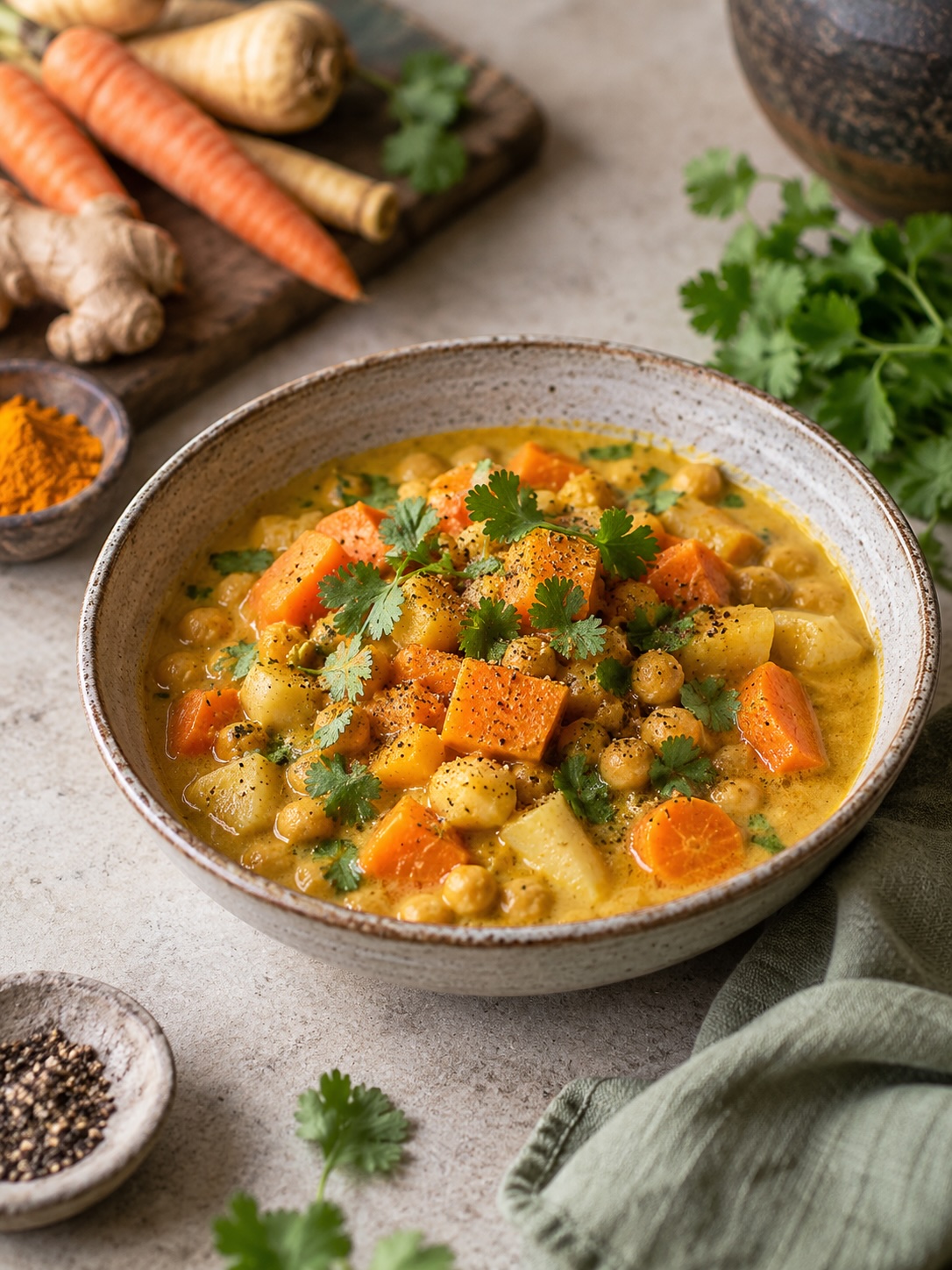
This Ayurvedic root vegetable stew with chickpeas and coconut is warming, grounding and full of digestive spices. Simple, nourishing and soothing when life has left you feeling a little scattered.
About this recipe
For those of you who have been on retreat with me, you may recognise this one. A version of this stew is often what I serve on our first day together.
There is a reason for that.
In Ayurveda, travel is considered inherently Vata aggravating. Vata is governed by the elements of air and ether and carries qualities that are light, mobile, dry, subtle and irregular.
Think about what happens when we travel. We cover distance, spend hours in cars, trains or planes, cross time zones and move from one environment to another. All of that movement can increase the mobile, light qualities of Vata. We might arrive feeling a little ungrounded or scattered, more in our heads than our bodies, with irregular digestion or some natural nervousness about arriving somewhere new.
One of Ayurveda’s foundational principles is:
samānya viśeṣa siddhānta
like increases like, and opposites bring balance.
So rather than adding more movement and lightness, we introduce the opposite qualities: warmth, nourishment, heaviness, stability and grounding.
And there are few foods that communicate grounding quite as literally as vegetables grown beneath the earth.
This is why I love serving root vegetables when people first arrive on retreat. Slowly cooked with ghee, warming spices, chickpeas and coconut milk, they make a wonderfully comforting first meal — a simple way of saying to the body: you’ve arrived.
An Ayurvedic Way of Cooking
Ayurveda has always understood food within the context of where we are, what season we’re in and what our body needs at that particular moment.
The Sanskrit concept of ṛtucaryā (ritucharya) describes living in accordance with the changing seasons — adapting our food and daily practices as the environment around us changes.
So don’t feel tied to exactly the vegetables I’ve listed here.
Use the root vegetables growing locally where you live and in season when you make it. Sweet potato, carrot and parsnip work beautifully, but pumpkin, squash, celeriac, turnip or other locally grown roots can all find their way into the pot.
That’s much more in the spirit of Ayurveda than trying to recreate the same recipe, with the same ingredients, everywhere in the world and throughout the year.
Ayurvedic Root Vegetable, Chickpea & Coconut Stew
SERVES 4 | PREPARATION 15 minutes | COOKING 30 minutes | BEST FOR Autumn / Winter | DOSHA Vata Balancing
Ingredients
• 2 sweet potatoes, diced
• 3 carrots, sliced
• 2 parsnips, diced
• 1 cup cooked chickpeas, drained and rinsed
• 1 cup coconut milk
• 2 cups vegetable stock or bone broth
• 1–2 tbsp ghee
• 1½ tsp turmeric
• 1½ tsp ground cumin
• 2 tsp freshly grated ginger
• Sea salt, to taste
• Fresh coriander (cilantro), roughly chopped, to finish
A note on the vegetables: Use this list as a guide rather than a rule. Swap in seasonal root vegetables that are grown locally to you whenever possible.
Optional bone broth: If you eat animal products, replace the vegetable stock with a good-quality bone broth for a richer, more nourishing version with additional protein.
Preparation & Method
1. Prepare the vegetables
Peel where necessary and cut the root vegetables into roughly even pieces so they cook at the same rate. Drain and rinse the chickpeas.
2. Warm the spices
Warm the ghee gently in a large, heavy-based pan. Add the grated ginger, turmeric and cumin and cook gently for around 30–60 seconds, until fragrant. Keep the heat low enough that the spices don’t burn.
3. Add the roots
Add the sweet potato, carrots and parsnips and stir well, coating the vegetables in the ghee and spices.
4. Simmer slowly
Pour in the vegetable stock or bone broth. Bring to a gentle simmer, cover and cook for approximately 20–25 minutes, or until the root vegetables are tender.
5. Add the chickpeas and coconut
Stir through the chickpeas and coconut milk. Simmer uncovered for another five minutes, allowing everything to come together and the sauce to thicken slightly.
6. Taste and finish
Season with salt and finish generously with freshly chopped coriander.
Serve warm.
Make it a meal
I love serving this with a few simple sides so you have different flavours and textures on the plate:
Ayurvedic rice · flatbread · pickled cucumber & beetroot · fresh coriander
The Ayurvedic Perspective
This is primarily a warming, grounding and nourishing Vata-balancing meal.
Root vegetables bring the sweet, earthy and substantial qualities that help counter Vata’s lightness and mobility. Cooking them until tender further reduces their dry and rough qualities, while ghee and coconut milk bring snigdha — the oily or unctuous quality that Ayurveda uses to balance dryness.
The spices do an equally important job.
In Ayurveda, digestion is understood through agni, our digestive capacity or “digestive fire.” Ginger and cumin are traditionally used to support agni and make heavier foods easier to digest. This is particularly useful here because chickpeas can be drying and more difficult for some Vata constitutions to digest.
This is an important principle of Ayurvedic cooking: we don’t only consider an ingredient in isolation. We consider its qualities, how it is prepared, what it is combined with and the person eating it.
Benefits & Traditional Uses
Ayurvedically, this is the sort of meal I reach for when there are signs of elevated Vata — particularly after travel or during the colder, windier months.
Its warm, cooked, substantial and oily qualities may be particularly appropriate when you’re experiencing:
Feeling scattered, ungrounded, nervous or restless — Ayurveda associates these experiences with an increase in Vata’s light and mobile qualities. Warm, regular and nourishing meals are traditionally used as part of a wider Vata-balancing approach to introduce more grounding and stability.
Difficulty winding down or disrupted sleep — insomnia is classically associated with Vata disturbance in Ayurveda. This isn’t a treatment for insomnia, but a warm, grounding evening meal can form part of a wider Vata-balancing routine.
Irregular digestion — Vata digestion is traditionally characterised by variability. Warm cooked food, regular mealtimes and digestive spices are generally favoured over cold, dry or raw meals.
Gas and bloating — ginger and cumin are traditionally used in Ayurvedic cooking for their digestive and carminative actions. Chickpeas themselves can increase gas for some people, however, so reduce them if you know legumes don’t suit your digestion.
Dryness — ghee and coconut milk bring oily, nourishing qualities that counter Vata’s inherent dryness.
Feeling depleted after travel or periods of change — the combination of carbohydrates, fat, fibre and plant protein makes this a substantial meal, while Ayurveda would describe its overall qualities as grounding and nourishing.
Turmeric, ginger and cumin all bring their own benefits, but Ayurveda rarely looks at a food in isolation. What matters is the whole meal — its qualities, how it has been prepared and, importantly, the person eating it.
Make it Work for Your Dosha
Vata
This is the constitution this recipe is particularly designed for. Serve it warm, cook the vegetables until beautifully tender and don’t skimp on the ghee. If chickpeas tend to leave you bloated or uncomfortable, reduce the quantity and increase the root vegetables.
Pitta
Keep the ginger moderate and avoid adding chilli or excessive pungent spice. The coconut milk and sweet root vegetables already bring some balancing qualities to the dish.
Kapha
Make the stew a little lighter: use less coconut milk and ghee, increase the ginger and warming spices to taste, and use a greater proportion of less sweet vegetables. Keep the serving moderate and pair it with lighter accompaniments.
Have You Made This Recipe?
I’d love to know how you made it your own — which seasonal vegetables you used, what you served it with, or simply how it made you feel.
Leave a comment below — I read them all and would love to hear how you got on.