
AUTUMN / WINTER · TRIDOSHIC
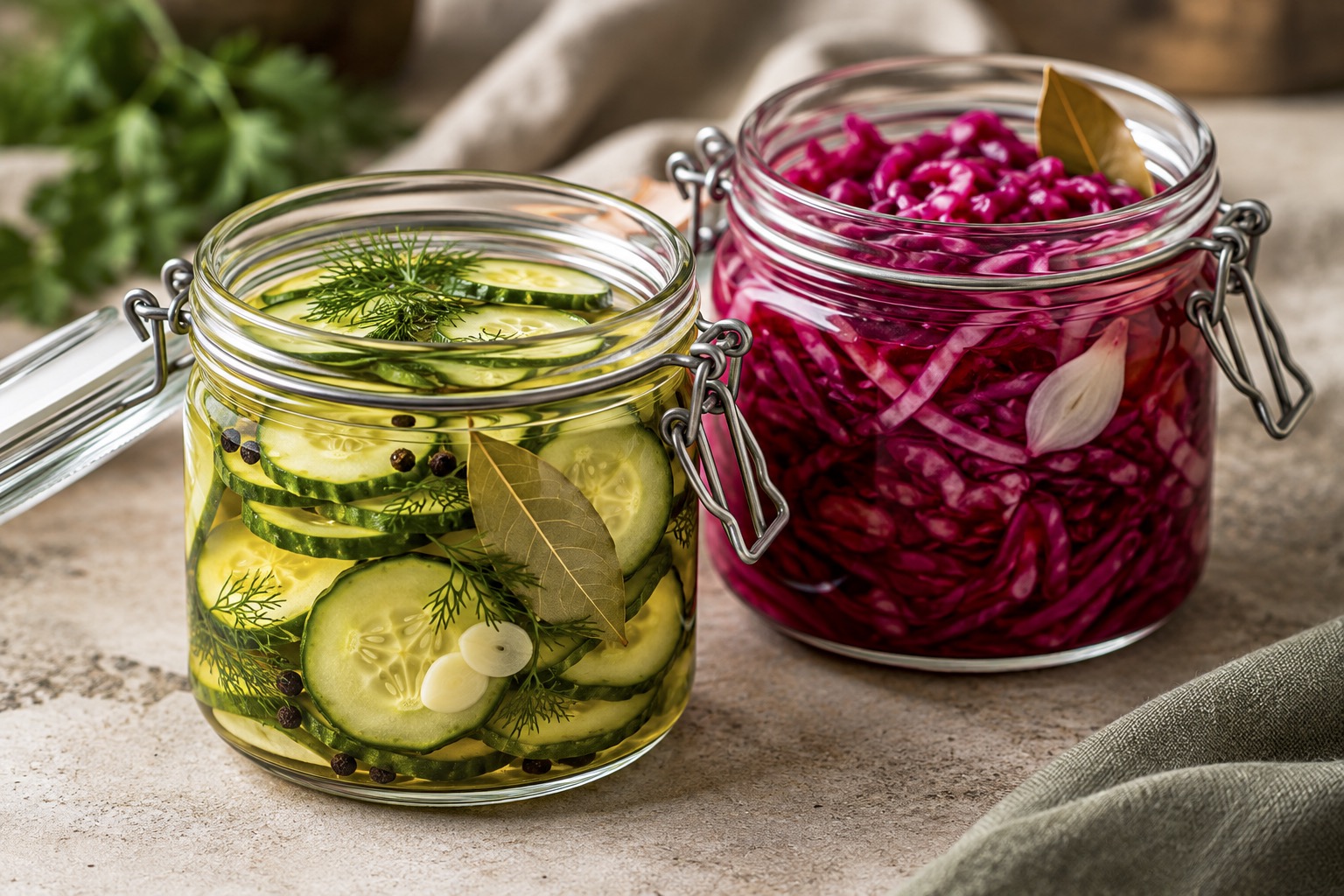
These quick Ayurvedic pickles with cucumber and red cabbage have become a staple on our Roam retreat dinner tables.
Made with apple cider vinegar, honey and digestive spices, they take minutes to prepare and are one of my favourite accompaniments to curries, dhal, rice, stews and bowls
They’re also a simple example of an important principle in Ayurvedic cooking: looking beyond an individual dish and considering the balance of the whole plate.
About these Ayurvedic Pickles
If you’ve ever eaten in India, you’ll probably have noticed how rarely a meal arrives as one single dish.
There might be dhal, vegetable curry, rice, pickle, chutney, fresh herbs and flatbread — lots of different colours, textures and flavours sharing the same plate.
There is some lovely Ayurvedic wisdom behind this.
Ayurveda describes Ṣaḍrasa (षड्रस) — the six tastes:
Rather than trying to squeeze all six tastes into every dish, different elements of a meal can contribute different tastes.
Rice might provide sweetness and nourishment, dhal astringency, while pickles, chutneys, herbs and spices introduce some of the sharper tastes.
This is one of the reasons I love putting several simple dishes and accompaniments on the table and letting everyone build their own plate.
An Ayurvedic Way of Cooking
Another way of looking at the balance of a meal is through augmenting and extractive foods.
Augmenting foods nourish, ground and build. They tend towards the sweeter taste and include foods such as rice, grains, carrots, pumpkin and sweet potato.
Extractive foods have lighter, reducing qualities and tend towards bitter and astringent tastes — leafy greens, legumes and more astringent vegetables.
A Simple Ayurvedic Plate
60% Augmenting
Nourish · Ground · Build
Rice · grains · root vegetables · pumpkin · carrots
40% Extractive
Lighten · Reduce · Cleanse
Leafy greens · legumes · bitter & astringent vegetables
Ayurvedic Pickles: Quick Cucumber & Red Cabbage Pickles
MAKES 2 JARS | PREPARATION 15 minutes | BEST FOR Autumn / Winter | DOSHA Tridoshic
Cucumber Pickle
• 1 cucumber, thinly sliced
• 1/2 cup apple cider vinegar
• 1/2 cup hot water
• 1 tsp honey
• 1/2 tsp sea salt
• 1 tsp black peppercorns
• 3 bay leaves
Red Cabbage Pickle
• 1/2 small red cabbage, finely sliced
• 1/2 cup apple cider vinegar
• 1/2 cup hot water
• 1 tsp honey
• 1/2 tsp sea salt
• 1 tsp black peppercorns
• 3 bay leaves
A note on the Liquid: Use equal quantities of apple cider vinegar and water and make enough to completely cover the vegetables.
Preparation & Method
1. Prepare the vegetables
Thinly slice the cucumber and finely shred the red cabbage. Pack into seperate clean glass jars.
2. Make the Pickling liquid
Mix the apple cider vinegar, water, honey and salt until dissolved.
3. Add the flavour
Add the peppercorns, bay leaf and any additional flavours to each jar.
4. Fill the jars
Pour over the pickling liquid until the vegetables are completely submerged.
5. Leave to pickle.
Seal and refrigerate. You can eat them after a few hours but they get better after a few days.
Make them your own
Once you have the basic recipe, play around with herbs and spices depending on what you have and what you are cooking for.
Dill — digestive; lovely with cucumber
Ginger — warming and digestive; Suitable for Vata/Kapha
Mustard seed — heating and stimulating; Suitable for Kapha
Coriander seed — digestive and gentler; Suitable for Pitta
Fennel — digestive and cooling; Suitable for Vata/Pitta
Mint — cooling; Pitta
Turmeric — bitter and pungent; Suitable for Kapha
Chilli — heating and stimulating; Suitable for Kapha
My favourites:
Cucumber + dill + coriander seed
Red cabbage + ginger + mustard seed
Make it a meal
Serve a spoonful alongside:
Kitchari · Dhal · Ayurvedic rice · Root Vegetable, Chickpea & Coconut Stew
The Ayurvedic Perspective
These pickles bring sour and salty tastes through the vinegar and salt, pungency through black pepper, and astringency through the red cabbage.
But Ayurveda doesn’t consider taste alone.
These vegetables are also raw and refrigerated, bringing cold and light qualities. This is why quantity, preparation and what we eat them with all matter.
Rather than eating a large bowl of cold pickled vegetables, think of them as an accompaniment — a small amount served alongside a warm, cooked meal.
This is an important principle of Ayurvedic cooking: we consider an ingredient’s taste and qualities, how it has been prepared, what it is combined with and, importantly, the person eating it.
Benefits & Traditional Uses
Ayurvedically, these are designed to be eaten in small quantities as part of a wider meal.
Their sour, salty, pungent and astringent qualities provide contrast alongside sweeter, softer and more nourishing foods.
The herbs and spices can also be adapted. Ginger, black pepper, mustard, fennel and coriander are traditionally used in Ayurvedic cooking in different ways to support agni — our digestive capacity.
There is also some interesting modern research behind vinegar. A systematic review and meta-analysis of controlled human trials found that vinegar consumed with a meal significantly reduced post-meal glucose and insulin responses.
Make it Work for Your Dosha
Vata
Sour and salty tastes can balance Vata, but raw and refrigerated foods have opposing qualities. Have these in small amounts alongside a warm meal, allow them to come towards room temperature and try adding ginger or fennel.
Pitta
Keep the vinegar, garlic and black pepper moderate. Try the cucumber version with coriander seed, fennel, dill or mint.
Kapha
Keep the honey minimal and add ginger, mustard seed or black pepper to bring more pungent, warming qualities.
Have You Made This Recipe?
I’d love to know how you made it your own — which herbs and spices ended up in your jars or what you served them alongside.
And next time your putting a meal together, look at the whole plate: Which tastes are already there, whats missing and what small addition could bring greater balance?
Leave a comment below — I read them all and would love to hear how you got on.