
BEAUTY · ALL SEASONS · TRIDOSHIC
Three simple Ayurvedic face masks made with everyday kitchen ingredients, with a different recipe for Vata, Pitta and Kapha skin.
Face Food
I love skincare. What I don’t love is an overflowing bathroom cabinet, expensive face masks and trying to decipher an ingredient list that requires a chemistry degree.
Which is why I’ve become a big fan of a face snack.
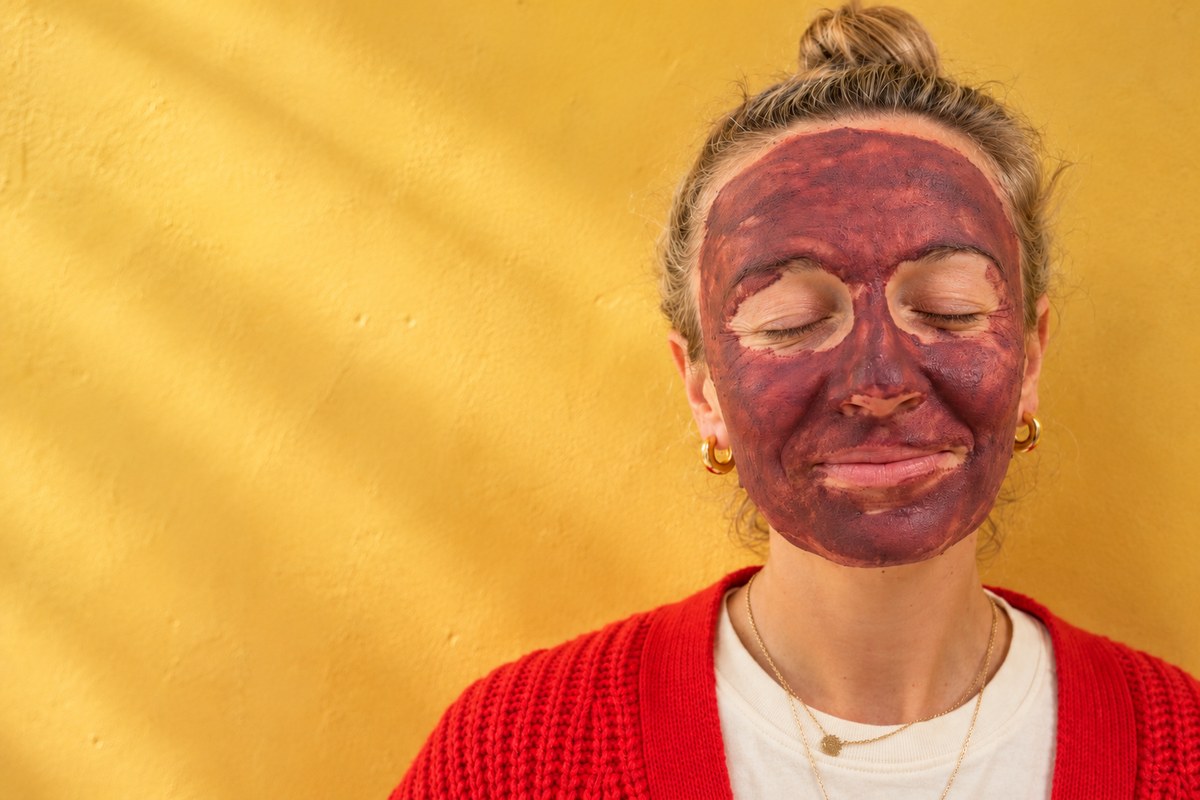
Milk, honey, rose, aloe, oats, almonds, avocado, chickpea flour… Ayurveda has been using everyday natural ingredients as part of beauty and skincare rituals for centuries. These days, when I go food shopping, not everything in my basket is destined for my belly. Some of it is going straight on my face.
I’ve stopped buying expensive face masks because, more often than not, I can make one in my kitchen in about two minutes. I know exactly what’s in it, there’s no long list of unnecessary ingredients to worry about, and I can change what I’m using according to what my skin actually needs.
The important bit is knowing which face food is right for your skin.
The Doshas & Your Skin
In Ayurveda, Vata, Pitta and Kapha are the three doshas — three biological energies that shape how our bodies and minds function. Each is formed from a combination of the five elements — ether, air, fire, water and earth — and has its own set of qualities that influence everything from our digestion and energy to our temperature, sleep and skin.
We all have all three doshas, but in different proportions, creating our individual constitution, or prakriti.
Those same qualities can also be seen in our skin. Vata’s dry and light qualities may show themselves as finer, drier skin; Pitta’s heat can appear as warmth, redness or sensitivity; while Kapha’s heavier, oilier qualities may show themselves as thicker, softer or more congested skin.
You don’t need to fit perfectly into one box. You might recognise two patterns, and your skin can change with your age, the seasons and what’s happening in your life.
The useful question is simply:
What does my skin need today?
Now for the face snacks….
Vata
Elements: Ether + Air
Skin: Fine, thin, dry
Tendencies: Dryness, dehydration, fine lines
Pitta
Elements: Fire + Water
Skin: Soft, warm, delicate
Tendencies: Redness, sensitivity, breakouts
Kapha
Elements: Water + Earth
Skin: Thick, smooth, soft
Tendencies: Oiliness, congestion, enlarged pores.
Three DIY Ayurvedic Face Masks
PREPARATION 2 minutes | TREATMENT 5 minutes | BEST FOR All seasons | DOSHA Tridoshic
VATA – Rose & Yoghurt Face Mask
Best for: Dry, fine or dehydrated skin
- 1 tbsp rose petal powder
- 1 tbsp yoghurt
Preparation & Method
Mix the rose petal powder and yoghurt together until you have a smooth paste. Apply gently over clean skin and neck, avoiding the immediate eye area.
Leave for around 10 minutes, removing the mask as it begins to dry rather than waiting until it becomes completely dry or tight. Rinse gently with lukewarm water and pat the skin dry.
Finish with a spritz of rose water.
PITTA – Aloe & Honey Face Mask
Best for: Sensitive, warm or acne prone skin.
- 1 tbsp aloe vera gel
- 1 tbsp honey
Preparation & Method
Mix the aloe vera and honey together until well combined, then smooth a thin layer over clean skin and the neck, avoiding the immediate eye area.
Leave for around 10 minutes before rinsing gently with cool or lukewarm water and patting the skin dry.
Finish with a spritz of rose water.
KAPHA – Fuller’s Earth & Rosewater Face masks
Best for: Oily, thicker, congestion prone skin.
- 1 tbsp Fuller’s Earth
- 2 tbsp Rosewater
Preparation & Method
Mix the aloe vera and honey together until well combined, then smooth a thin layer over clean skin and the neck, avoiding the immediate eye area.
Leave for around 10 minutes before rinsing gently with cool or lukewarm water and patting the skin dry.
Finish with a spritz of rose water.
The Ayurvedic Perspective
In Ayurveda, a herbal paste applied externally to the skin is known as a lepa. These preparations can be made using herbs, flowers, foods and other natural ingredients, combined with liquids such as water, milk or oils depending on the qualities we want to bring to the skin.
What I particularly love about this approach is how individual it is. Rather than assuming every face needs the same thing, we can look at the qualities showing up in our skin and choose our ingredients accordingly.
And while Ayurveda has been using ingredients such as these for centuries, modern research is beginning to explore some of them too. Honey, for example, has been studied for its antimicrobial, anti-inflammatory and skin-supporting properties, which makes the contents of our kitchen cupboard rather more interesting from a skincare perspective.
Beauty From the Inside Out
Of course, Ayurveda doesn’t only consider what we put on our skin. What we eat, how well we digest it, our sleep, hydration and daily habits are all part of the picture too.
So while some of the food in my shopping basket is now destined for my face, I make sure plenty of it still makes it into my belly!
If you’d like to explore the other side of Ayurvedic skincare, try my Ayurvedic Skin Tonic with Saffron & Rose — a warming blend of milk, saffron, rose, turmeric, cardamom and ghee created to support the skin from within.
Have You Tried Face Food?
Next time your food shopping, perhaps pick up a little something for your face too.
Choose the mask that closely matches what your skin needs today, give yourself 10 minutes for a DIY facial and see how your skin feels afterwards.
The come back and let me know in the comments which face snack you tried.